
Is it really?
You have certainly heard this before. Films, television, and popular culture have long reinforced this idea through the familiar stereotype of the “fashion girl” – a woman who spends her days shopping, surrounded by clothes, shoes, and designer handbags, and who is presumed to lack depth, intelligence, or substance beyond her appearance.

But this association between appearance and frivolity did not emerge by chance.
The belief that caring about one’s image is superficial gained strength across different historical periods, always tied to disputes over morality, power, labor, and, above all, the control of the female body. For a long time, women were led to believe that in order to be taken seriously – in professional settings, politics, or intellectual life – they needed to distance themselves from aesthetics, vanity, and femininity, as though beauty and intelligence were opposing forces.
This narrative quietly settled into the minds of many women, accompanied by the fear of being dismissed for appearing “too feminine.”
But an honest question remains:
Do you truly believe that neglecting one’s appearance makes someone more intelligent, more capable, or more worthy of respect?
I do not believe that.
And science does not either.
Research in social psychology on enclothed cognition demonstrates that the clothes we choose to wear directly influence our behavior, our mental state, and the way we express our abilities.
In controlled studies, individuals wearing more formal and structured clothing showed greater focus, self-control, and performance in cognitive tasks. They communicated with increased confidence, maintained steadier eye contact, and reported a stronger sense of competence – even without any objective change in skill. When dressed more casually, these effects tended to diminish.
This occurs because we all carry, within our collective imagination, symbolic meanings associated with clothing.
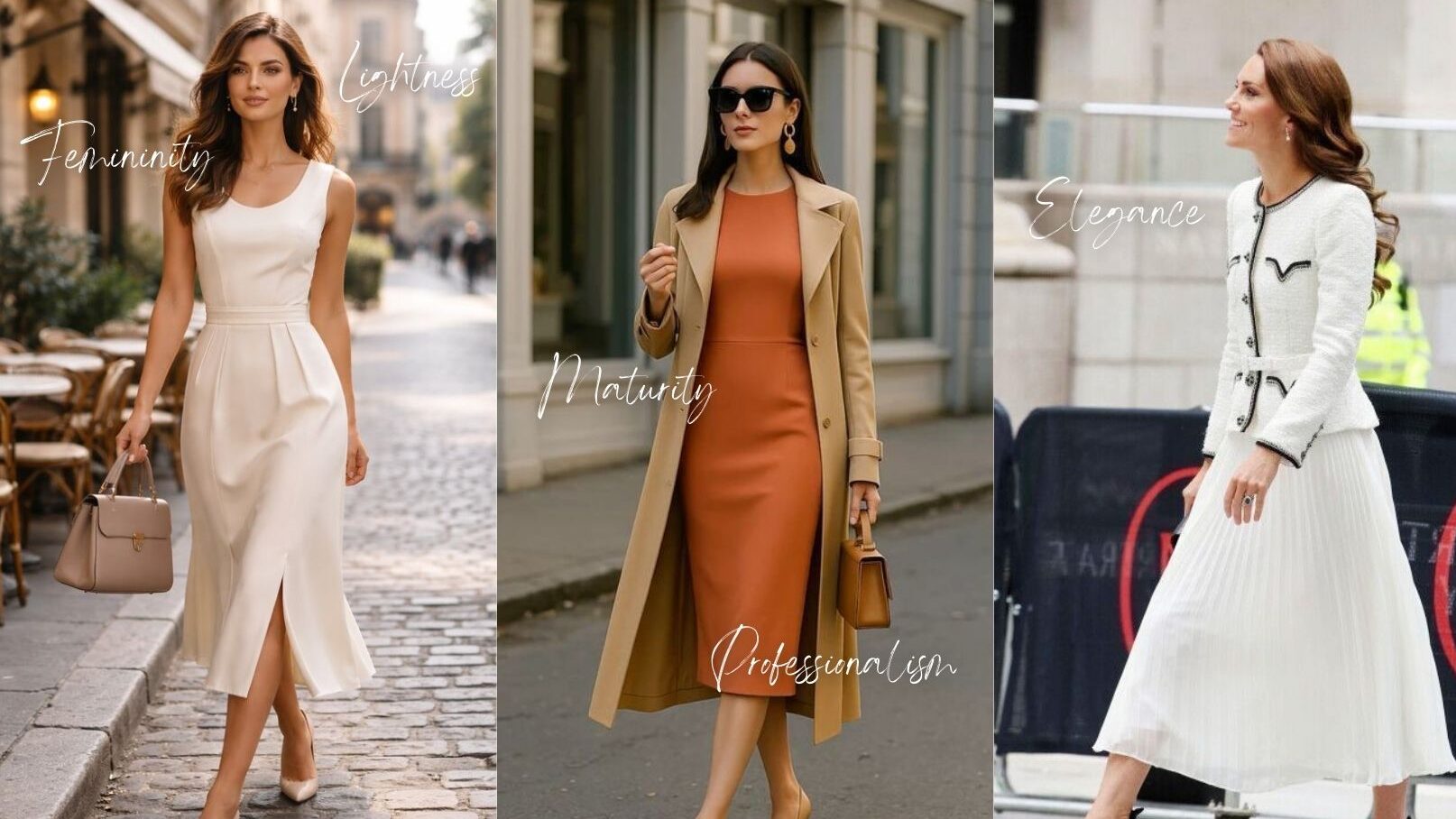
When we imagine a long gown with a flowing train standing out in a crowd, it is nearly impossible not to picture an elegant, self-assured woman moving with presence. A light, floral summer dress evokes softness, femininity, and ease. Structured, precisely tailored garments call to mind leadership, authority, and clarity.
These symbols do not exist only in imagination.
They activate real behavior.
For this reason, clothing functions as a powerful cognitive trigger – both for ourselves and for those we interact with. What we wear can evoke confidence, professionalism, femininity, gentleness, or strength. This is not about pretending to be someone else, but about consciously accessing aspects of who we already are and choosing which of them we wish to express in a given moment.
Seen from this perspective, the cost of neglecting one’s image becomes evident. How many intelligent, sensitive, vibrant women hide behind a careless appearance, believing it is necessary to be taken seriously? How many attempt to erase their femininity in the hope of earning respect?
The truth is clear:
Femininity does not diminish competence.
Beauty does not negate depth.
And personal care is not frivolity.
Investing time and money in your personal image is not superficial – it is strategy, it is language, it is positioning. When done with intention and awareness, the way you dress can open doors, strengthen your presence, and align who you are with what you wish to communicate to the world.
Valuing your image is, ultimately, an act of profound self-respect.
IH